
EMERGENCY MEDICAL SERVICES
Paramedic
To be a successful Paramedic you should...
have the ability to understand and follow instruction; have the ability to drive under adverse conditions; have the ability to work in a stressful environment; have the ability to make good decisions and use personal judgment; have the ability to apply interspersonal and patient skills with all age groups, including pediatric and geriatric patients as well as bystanders; have excellent listening skills; have the ability to lift, move and secure patients; be willing to learn and continue to learn.
What will my job be like?
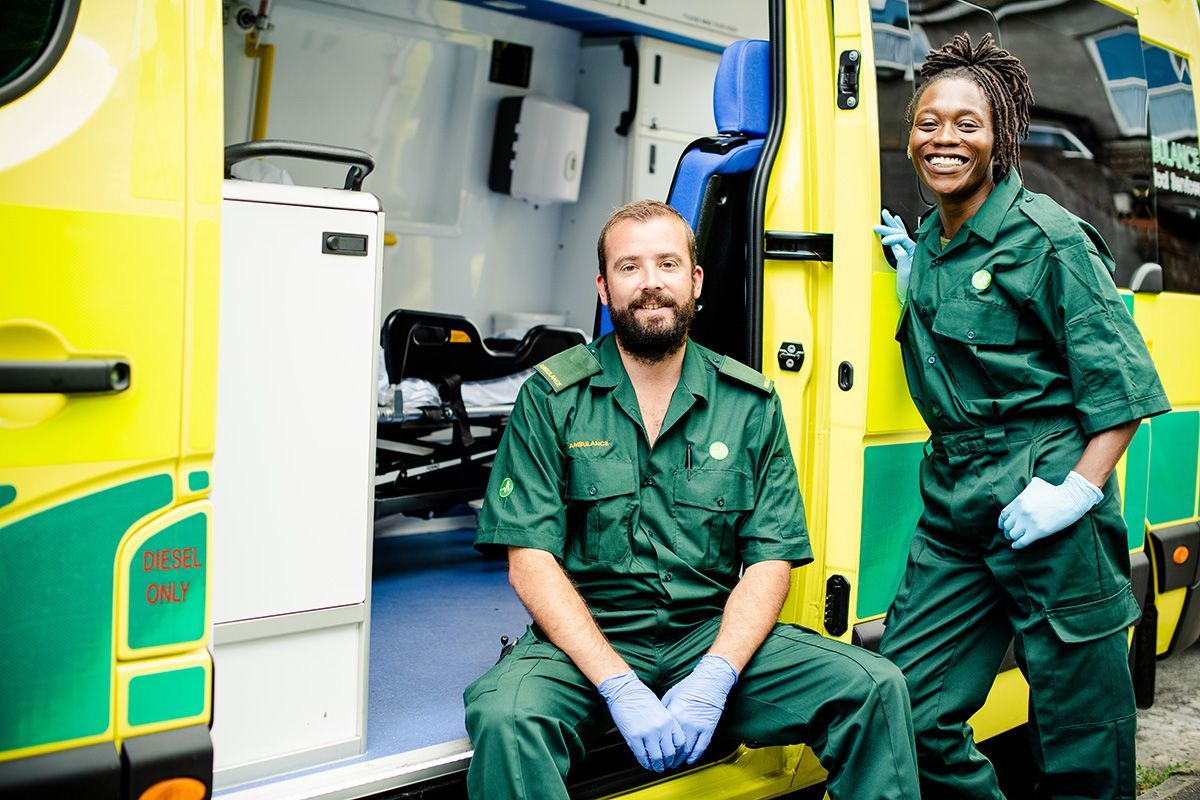
EMT-Paramedics respond to health care crises such as heart attacks, unexpected childbirth, car accidents, and fires. Paramedics use their knowledge and skills to provide basic and advanced life support to seriously ill or injured patients before these patients reach the hospital. Under the direction of a physician, EMT-Paramedics are told how to proceed with medical care. They perform CPR (cardiopulmonary resuscitation), control bleeding, place splints on broken bones, and check pulse and respiration. EMT-Paramedics provide the most extensive pre-hospital care. In addition to performing the procedures already described, paramedics may administer drugs orally and intravenously, interpret electrocardiograms (EKGs), perform endotracheal intubations, and use monitors and other complex equipment.
Where could I work?
EMTs and EMT-Intermediates work both indoors and outdoors, in all types of weather. EMTs work 40+ hours per week. Some of these workers, especially those in police and fire departments, are on call for extended periods. Because emergency services function 24 hours a day, EMTs have irregular working hours that require a significant time commitment. The EMT’s work is not only physically strenuous, but may also be stressful, involving life-or-death situations and suffering patients. Nonetheless, many people find the work exciting and challenging, and enjoy the opportunity to help others.
Other workplace settings:
- Ambulance Companies
- Rescue or Aeromedical Services
- Hospital Emergency Rooms
- Private Industry
- Educational Institutions
- Goverment Agencies
Average Annual Salary
$44,780 per year
What is the future of this career?
Overall employment of EMTs and paramedics is projected to grow 6 percent from 2023 to 2033, faster than the average for all occupations.
About 19,200 openings for EMTs and paramedics are projected each year, on average, over the decade. Many of those openings are expected to result from the need to replace workers who transfer to different occupations or exit the labor force, such as to retire.
Type of Education/Training
Formal training and certification is needed to become an EMT -Basic, Intermediate, or Paramedic. The most advanced level of training for this occupation is EMT-Paramedic. The Paramedic Technology program usually lasts 1400 hours. Extensive related coursework and clinical and field experience is required.
Where could I get the education/training?
- CT State Capital
- CT State Northwestern
- University of New Haven
- Yale New Haven Hospital
Licensing/Certification
Licensure is required in the state of Connecticut. Prerequisite: Connecticut requires U.S. D.O.T. EMT-Intermediate Training Program.
More Information
National Association of Emergency Medical Technicians
PO Box 216
Ridgeland, MS 39158-0216
www.naemt.org
National Registry of Emergency Medical Technicians
PO Box 772000
Detroit, MI 48277
(614) 888-4484
www.nremt.org