
Veterinary Medicine
Veterinarian
To be a successful Veterinarian you should...
be compassionate when working with animals and their owners, be sensitive when dealing with owners and sick pets, have excellent decision-making skills, have strong communication and interpersonal skills, have good manual dexterity, have strong problem-solving skills.
What will my job be like?
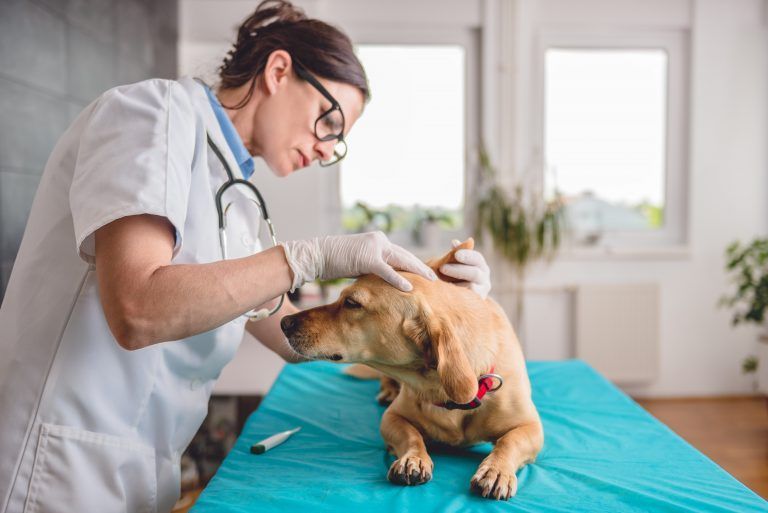
Veterinarians’ work can sometimes be emotionally stressful, as they deal with sick animals and the animals’ anxious owners. Some work nights and weekends, and long hours. They may have to respond to emergencies.
Working on farms and ranches or with wildlife can also be physically demanding. Those who specialize in food animals or horses work outdoors in all kinds of weather and may have to perform surgery, often under unsanitary conditions.
Veterinarians who conduct research work primarily in offices and laboratories and spend much of their time dealing with people, rather than animals.
Specialties
- Companion animals
- Equine
- Food animals
- Food safety and inspection
- Research
Where could I work?
Most veterinarians work in private clinics and hospitals; others travel to farms, work in laboratories or classrooms, or work for the government. Veterinarians who treat horses or food animals must travel between their offices and farms and ranches.
Other workplace settings:
- Agribusiness
- Biomedical Research
- Herd Health Managers
- Humane Societies
- Military Service
- Pharmaceutical Companies
- Teaching
- Zoo/Wildlife Medicine
Average Annual Salary
$125,510 per year
What is the future of this career?
Employment of veterinarians is projected to grow 19 percent from 2023 to 2033, much faster than the average for all occupations.
About 4,300 openings for veterinarians are projected each year, on average, over the decade. Many of those openings are expected to result from the need to replace workers who transfer to different occupations or exit the labor force, such as to retire.
Type of Education/Training
Veterinarians must complete a Doctor of Veterinary Medicine (D.V.M. or V.M.D.) degree at an accredited college of veterinary medicine. A veterinary medicine program generally takes 4 years to complete and includes classroom, laboratory, and clinical components.
Although not required, most applicants to veterinary school have a bachelor’s degree. Veterinary medical colleges typically require applicants to have taken many science classes, including biology, chemistry, anatomy, physiology, zoology, microbiology, and animal science. Most programs also require math and humanities and social science courses.
In veterinary medicine programs, students take courses on normal animal anatomy and physiology, as well as disease prevention, diagnosis, and treatment. Most programs include 3 years of classroom, laboratory, and clinical work. Students typically spend the final year of the 4-year program doing clinical rotations in a veterinary medical center or hospital. In veterinary schools today, increasingly, courses include general business management and career development classes, to help new veterinarians learn how to effectively run a practice.
Where could I get the education/training?
There are currently no educational opportunities in Connecticut to become a veterinarian.
Licensing/Certification
Licensure is required in the state of Connecticut. Requirements:
Doctor of veterinary medicine degree or its equivalent from a school of veterinary medicine, dentistry or surgery which, at the time of graduation, was accredited by the American Veterinary Medical Association (AVMA);
Successful completion the North American Veterinary Licensing Examination (NAVLE) or the National Board Examination (NBE) and Clinical Competency Test (CCT) in Veterinary Medicine, with the criterion-referenced pass point developed by NAVLE or NEEC.
Please visit the State of Connecticut Department of Public Health website for more information.
More Information
American Veterinary Medical Association
1931 North Meacham Road, Suite 100
Schaumburg, IL 60173
800-248-2862