
ENVIRONMENTAL SCIENCES
Environmental Health Specialist
To be a successful Environmental Health Specialist you should...
have an ability and a strong interest in science; have the ability to follow a problem to conclusion; have the ability to work with a variety of people; have the ability to work with governmental regulations; have the ability to think logically; have the ability to speak and write effectively; have the ability to exercise patience, flexibility, and a willingness to work in different locations under a variety of conditions.
What will my job be like?
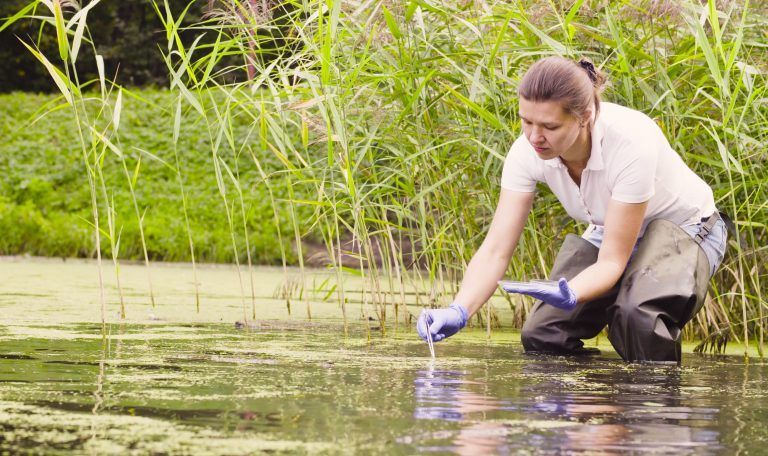
Environmental health specialists conduct research or perform investigations for the purpose of identifying, diminishing, and/or eliminating sources of pollutants and hazards that affect either the environment or the health of the population. They may collect, synthesize, study, report, and take action based on data derived from measurements or observations of air, food, soil, water and other sources.
Specialties
- Air and Water Pollution
- Food Protection
- Hazardous Waste Disposal
- Milk and Dairy Production
- Occupational Health
Where could I work?
Some environmental health specialists work as inspectors for state and local health departments, wildlife parks, hospitals, private industry, and non-profit organizations.
Average Annual Salary
$78,980 per year
What is the future of this career?
Employment of environmental scientists and specialists is projected to grow 7 percent from 2023 to 2033, faster than the average for all occupations.
About 8,500 openings for environmental scientists and specialists are projected each year, on average, over the decade. Many of those openings are expected to result from the need to replace workers who transfer to different occupations or exit the labor force, such as to retire.
Type of Education/Training
Environmental health specialists begin with an associate or bachelor’s degree. Environmental health specialists involved in research, administration, environmental protection, and resource management earn at least a master’s degree, and some earn doctoral degrees in areas such as water resources engineering, air and industrial hygiene, environmental management, and related fields.
Where could I get the education/training?
- CT State Three Rivers
- Eastern Connecticut State University
- Fairfield University School of Nursing
- Goodwin University
- Mitchell College
- Quinnipiac University
- Southern Connecticut State University
- Trinity College
- University of Connecticut
- University of Hartford
- University of New Haven
- University of Saint Joseph
- Wesleyan University
- Yale University
Licensing/Certification
Licensure is required in the state of Connecticut.
More Information
Association of Schools & Programs of Public Health
1615 L Street NW
Washington, DC 20036
202-296-1099
Connecticut Environmental Health Association
Mashantucket Pequot Tribal Nation, Regulatory Affairs, 550 Trolley Line Blvd. PO Box 3202
Mashantucket, CT 06338
860-312-3039
National Environmental Health Association
1400 S. Colorado Blvd., Suite 325
Denver, CO 80222
303-802-2200