
BIOTECHNOLOGY
Biochemist
To be a successful Biochemist you should...
be curious about the chemical origins of life, the cell, the effects of organisms on the cell, and how altering conditions can improve life on earth; be a creative, imaginative, hardworking individual who enjoys interacting with other scientists; be persistent; be cooperative and able to work well with others; have strong oral and written communication skills.
What will my job be like?
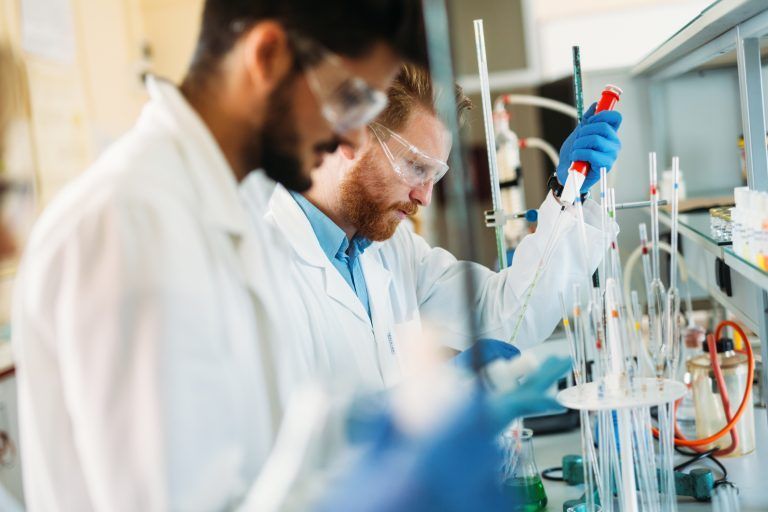
Biochemists study the chemical components and processes of living systems, plants, insects, viruses, microorganisms, and mammals to explain how and why chemical reactions occur. Their work contributes to many fields of science. Biochemists may specialize in biomedical equipment used in radiology, nuclear medicine, surgery, dialysis, intensive care, or the laboratory.
Where could I work?
Biochemists work in hospitals, medical centers or clinics, or manufacturers in sales engineering/service. Colleges and universities employ the majority of biochemists as teachers or researchers. The Department of Agriculture, the National Institutes of Health, and the Environmental Protection Agency are just a few of the government agencies that employ biochemists specializing in basic research, analyzing food, drugs, air, water, waste, or animal tissue.
Other workplace settings:
- Pharmaceutical Industry
- Clinical Research
Average Annual Salary
$107,460 per year
What is the future of this career?
Employment of biochemists and biophysicists is projected to grow 9 percent from 2023 to 2033, much faster than the average for all occupations.
About 3,100 openings for biochemists and biophysicists are projected each year, on average, over the decade. Many of those openings are expected to result from the need to replace workers who transfer to different occupations or exit the labor force, such as to retire.
Type of Education/Training
Preparing for a career in this field requires earning a bachelor’s degree in biochemistry or chemistry, with specialties in cell biology, genetics, molecular biology, biophysics, or biochemical methods. Some universities offer a 1-year program after undergraduate school for training in specialized laboratory techniques. Positions that involve teaching in a college or directing research require at least a master’s degree, preferably a doctorate.
Where could I get the education/training?
- Albertus Magnus College
- Central Connecticut State University
- CT State Asnuntuck Community College
- CT State Capital Community College
- CT State CT State Naugatuck Valley
- CT State Gateway
- CT State Housatonic
- CT State Manchester
- CT State Middlesex
- CT State Northwestern
- CT State Norwalk
- CT State Quinebaug Valley
- CT State Three Rivers
- CT State Tunxis
- Eastern Connecticut State University
- Fairfield University
- Quinnipiac University
- Sacred Heart University
- Southern Connecticut State University
- Trinity College
- University of Connecticut
- University of Hartford
- University of New Haven
- University of Saint Joseph
- Wesleyan University
- Western Connecticut State University
- Yale University
Licensing/Certification
Licensure is not required in the state of Connecticut.
More Information
American Society for Biochemistry and Molecular Biology
6120 Executive Boulevard, Suite 230
Rockville, MD 20852
https://www.asbmb.org
Federation of American Societies for Experimental Biology
https://www.faseb.org/